The short answer
Specialty coffee is coffee that scores 80 or more out of 100 when graded by a trained, licensed taster — and, just as importantly, coffee you can trace back to the place and the people who grew it. Everything else follows from those two ideas: quality you can measure, and a story you can verify.
It isn't a label a brand gets to award itself. The term was coined back in the 1970s by green-coffee importer Erna Knutsen, who used "specialty coffee" to describe beans grown in special microclimates that produced distinctive flavours. Half a century later, the definition has tightened into something closer to a craft standard than a slogan.
Commodity coffee asks how much. Specialty coffee asks where, who, and how.
Where the 80-point line comes from
The Specialty Coffee Association uses a 100-point scale. Licensed graders taste a coffee under a strict protocol — fragrance and aroma, flavour, acidity, body, balance, aftertaste, sweetness, uniformity, cleanliness — and score each. A coffee that lands at 80 or above is considered specialty grade. Cross 85 and you're into excellent; the rare lots that reach the 90s are the ones that break auction records.
What matters for you as a drinker isn't the exact arithmetic. It's that the number reflects an absence of defects and a presence of distinct, pleasant flavour. Below 80, you start finding the faults — sourness, mustiness, woodiness — that mass-market coffee learned to bury under dark roasting.
Traceability: the other half
A score alone isn't enough. The thing that separates specialty from commodity is that you can follow the bean backwards.
Commodity coffee is blended, anonymous, and priced on a global futures market — a sack labelled by country at best. Specialty coffee is traceable: a country, a region, often a single farm or producer, plus the variety, the processing method, the altitude it grew at, and the year it was harvested. That transparency isn't decoration. It's what lets a roaster pay a fair price for quality, and what lets the flavour in your cup be repeatable rather than a happy accident.
It survives a whole chain of care
No single step makes coffee special — a single careless one can unmake it. Think of it as a relay:
- The variety and the land. Cultivars like Bourbon, Caturra or Gesha, grown at altitude in the right soil and climate.
- The picking. Only ripe, red cherries, often hand-selected over several passes.
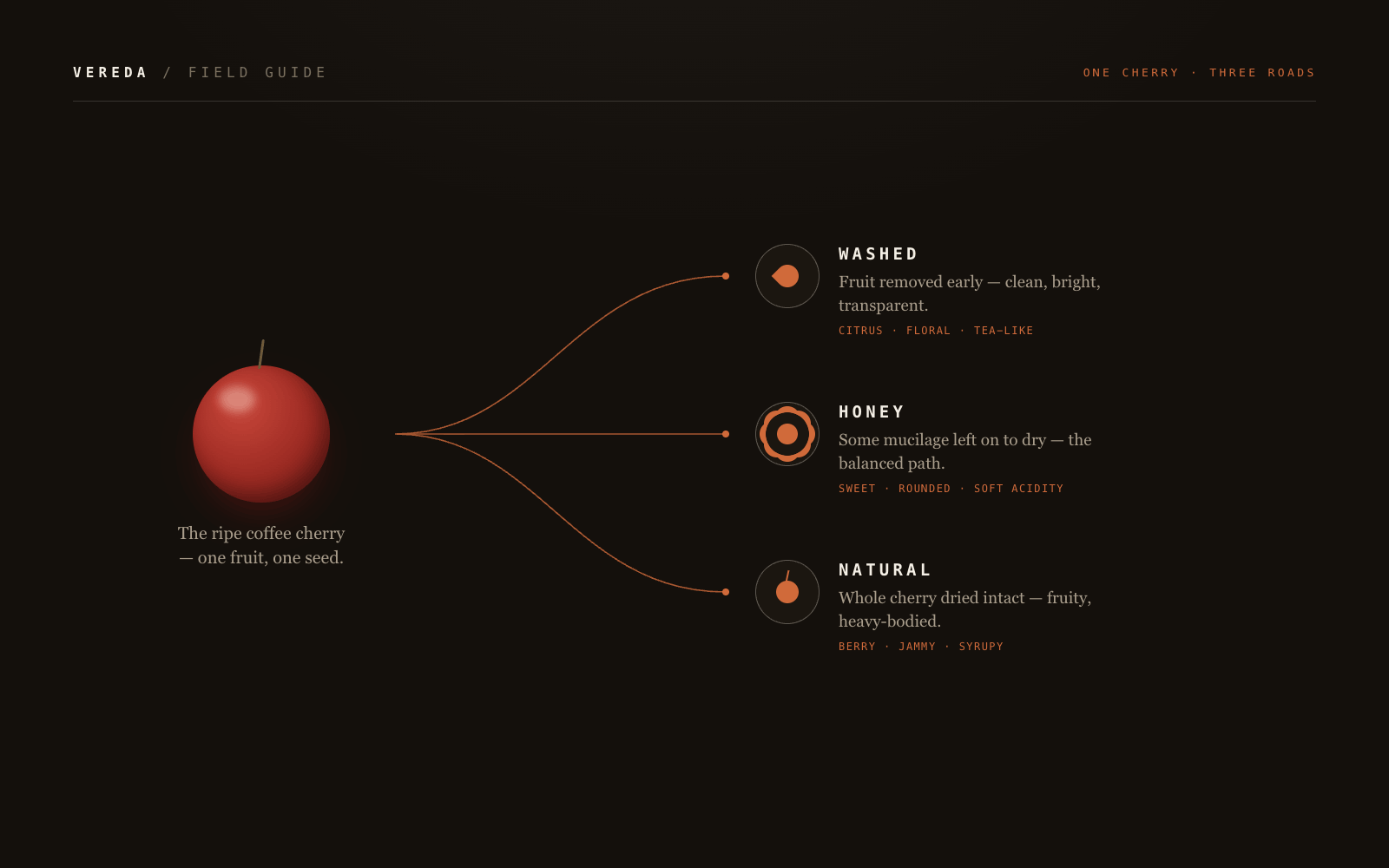
- The processing. How the fruit is removed and the seed is dried — washed, natural, or honey — shapes the cup as much as origin.
- The roasting. Roasted to reveal the bean's character, not to hide it; usually lighter than supermarket coffee.
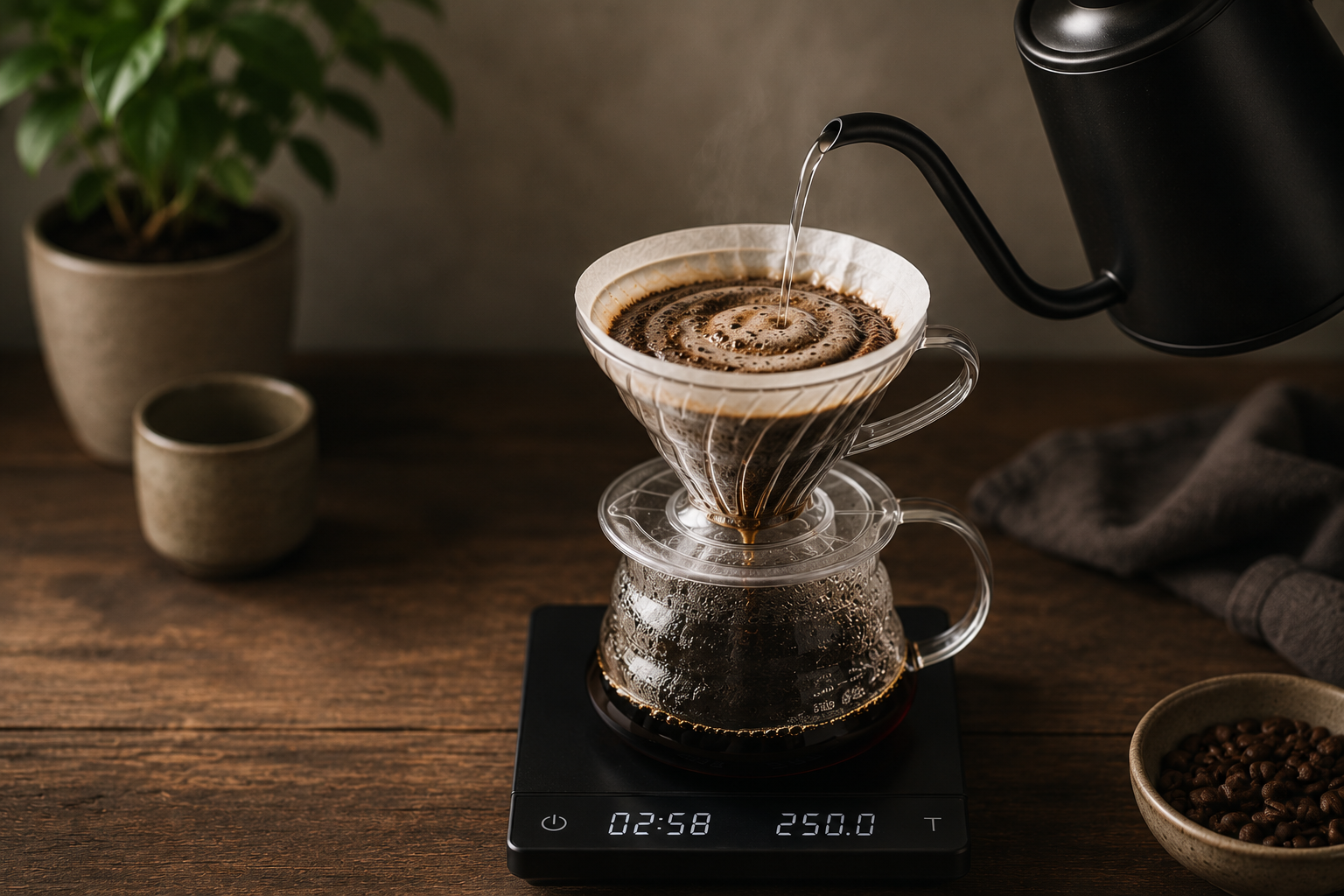
- The brewing. Fresh grinding, the right ratio, clean water — the last link, and the one you control.
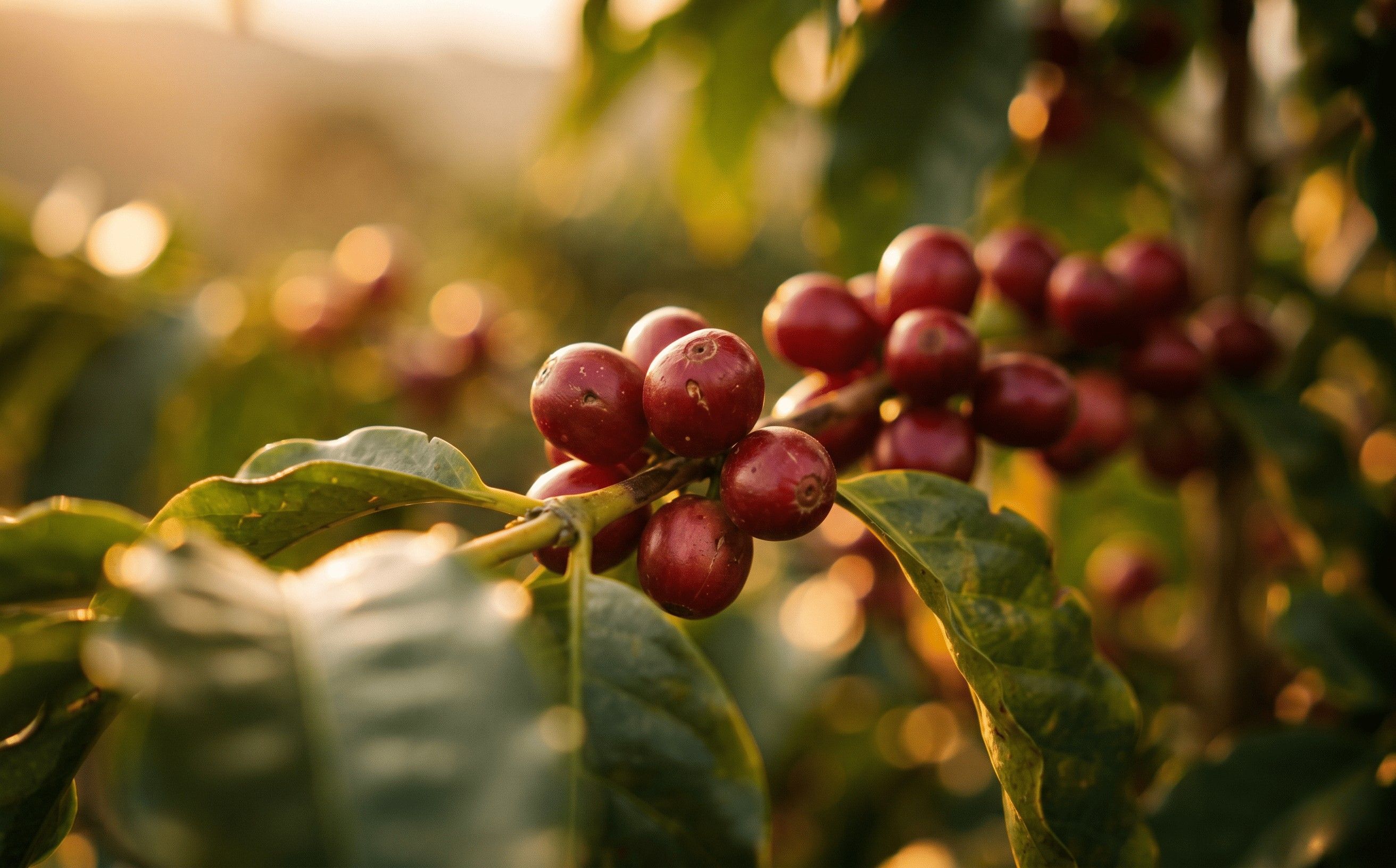
Coffee is a fruit. The "bean" is the seed inside a cherry — and everything done to that fruit ends up in your cup.
So is expensive coffee always specialty?
No — and this is where a lot of money gets wasted.
- Price doesn't equal grade. Some of the world's priciest coffees are novelties (the famous "animal-digested" beans, for instance) that wouldn't score near 80 in a blind cupping. Meanwhile, genuinely excellent specialty coffee can be very affordable.
- Specialty isn't "strong" or "dark." Strength is about dose and brew; quality is about the bean. Specialty coffee actually trends light, because dark roasting flattens the very flavours you paid for.
- Specialty isn't the same as organic or fair-trade. Those are separate certifications. Many superb coffees aren't certified — the paperwork is expensive for a small farm — while a certified coffee can still be mediocre in the cup.
How to tell what's in your cup
A quick field test. Genuinely specialty coffee almost always has:
- A roast date printed on the bag — not just a "best before."
- A named origin — a country at minimum, ideally a region, farm or producer.
- A variety and a process listed.
- Tasting notes that sound like food ("blackcurrant, brown sugar, jasmine"), not vague adjectives like "rich and bold."
- Whole beans, roasted light enough to actually taste the origin.
- A roaster or café that's happy to tell you where it came from.
Common questions
Is "specialty coffee" just a marketing term?
No. It's a defined grade — 80+ on a 100-point scale assessed by trained graders — combined with traceability back to origin. Brands can misuse the word, which is exactly why the checklist above matters.
Does specialty mean organic or fair-trade?
Not necessarily. Those are independent certifications about farming and pricing. A coffee can be specialty without either, and certified without being specialty.
Is specialty coffee stronger or more caffeinated?
No. Caffeine depends on how much coffee you use and how you brew it, not on quality. Lighter specialty roasts aren't "weaker" — they're just less roasted.
Every roaster on Vereda lists the origin, variety, process and score on each bag — so "specialty" is something you can check, not just take on trust. Browse roasters on Vereda →